 OLED screens are rising in popularity and being used more in smartphones. However, according to a report by iSuppli, it seems that manufacturers of the screens cannot keep up with demand.
Samsung is one manufacturer of OLED screens but is actively pushing the Samsung Galaxy S series of smartphones this year and is using the screens for it’s own products. The other big player is LG who is also attempting to push screens out.
Shipments of small-sized AMOLEDs used in cell phones and other applications are projected to reach 184.5 million units by 2014, up from 20.4 million units in 2009, for a Compound Annual Growth Rate (CAGR) of 55.1 percent during the period, according to a revised forecast from iSuppli. While such growth is impressive, the AMOLED shipments pale next to small-sized AMLCDs, which are forecasted to rise to 1.75 billion units by 2014 from 1.3 billion in 2009.
 Check out this Tetris style game that is being played on a screen made of water. The screen is separated in to three screens with the water streams lined up allowing a projector to project seamlessly on to each layer.
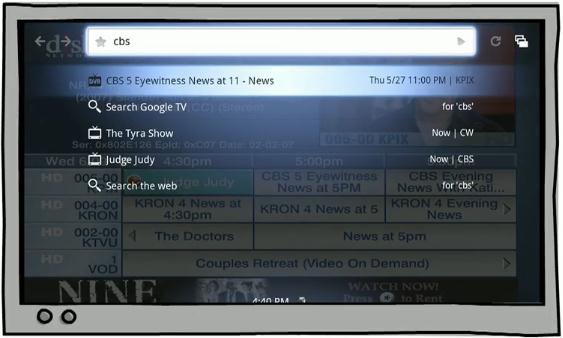 You might have heard recently about Google [GOOG] moving in to the TV business by launching Google TV. Google TV comes in two forms, the first is a set top companion box that sits in-between your cable/satellite providers box and your TV and the second is Google TV built in to new TV’s The system allows you to watch what you want, when you want.
 One problem with 3D TV (other than the current high price of the screen) is that you need to wear glasses to get the 3D effect. Glasses are expensive (over $50 a pair), and there is no standard yet for glasses which means the specs used on one suppliers screen wont work on a screen from another company in some cases. A demo of that can be seen
 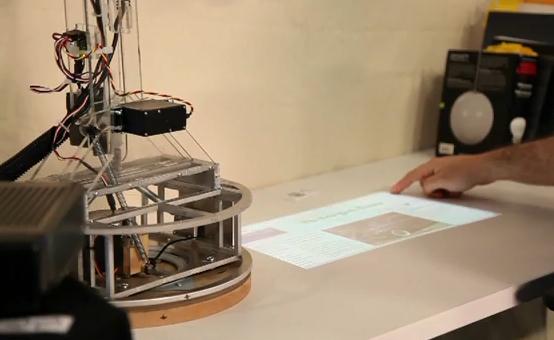 LuminAR is a robot that has a small pico-projector attached. The device is capable of moving automatically around your desk space and can project images on to your desk, wall or augment information on to magazines or books if desired (or programmed to do so).
 Sony has released several new 3D TV’s. The new TVs use shutter glasses to bring the 3D effect in to the living room. Sony has opted to use proprietary high frame rate screens which can provide full HD 3D images.
 Sony is launching a new advert to promote their new 3D TV’s. The advert features the Brazilian footballer Kaka and the ad is designed to be watched on both 3D and 2D TV sets. When watched in 3D you get the full 3D effect whilst watching in 2D you get double images that make you want to grab a pair of 3D glasses and watch it correctly.
 Toshiba has created an LCD panel that is flexible. When bending the screen the program running on the screen can be zoomed in and out of. Google Earth has been used in this case as an example of how to zoom in and out of the planet. When bending backwards the planet zooms in and when bending inwards, the planet zooms out.
 NEC Display Technologies has announced a new 3D enabled DLP projector. It is called the NP216J-3D and has a resolution of 1024×768 pixels.
 Sony has created an amazing looking rollable colour OLED display. The ultra thin screen measures 80μm in thickness and measures 4.1 inches diagonal.
 LG has given details of a new 84 inch 3DTV that uses


