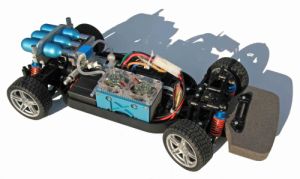
I have see a few cool Hydrogen powered gadgets around over the last year or so. This latest one appears to be the latest and greatest one though. It costs $1500 which isn’t cheap, but the kit does fit in to a Tamiya TT-01 type chassis. The fuel cell is named the FCJJ-21 and has a 30W air-cooled PEM fuel cell. Fuel is stored in 3 10L metal hydride canisters.
You may wonder why you would want to fork out $1500 for a power source like this. Well, this fuel cell can power your RC car at good speed for over an hour. The most you normally get from an RC charge is up to 15 minutes when using Nimh batteries.
I cannot wait for this to drop in price as it would be great to play with RC cars for more then 15 minutes.
Via: gopaultech
 HP are launching a seriously nice looking UMPC named the 2133. The screen is just 8.9 inches which is ample for a UMPC and it is scratch resistant. The resolution it runs at is 1366 x 766 (WXGA). An ExpressCard/54 slot can be found in there along with Wireless LAN, a QWERTY keyboard that is not much smaller then normal and a web cam can also be found integrated too.
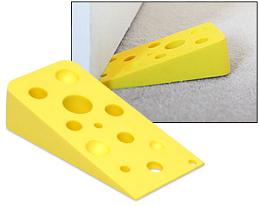 How about a nice triangle of Swiss cheese to use as a door wedge? This cheesy door wedge is just that, although it is just made of plastic rather then cheese. The wedge is flexible and can squeeze under any door to keep it open when needed. I have to admit that there isn’t anything gadgety about a cheesy door wedge, but I thought it looked cool so thought I would share 😉
 The iPhone screen transformed the way we interact with our mobile phones. The multi touch interface and very quick screen response made the iPhone a very usable device. HowStuffWorks have created an interesting article which breaks down the iPhone multi touch screen and shows in detail how it all works.

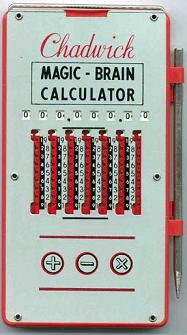 The Magic Brain Calculator was a device used many years ago (mabye 1950’s) to solve maths problems. It requires you reset it to all zero’s to begin with and after a bit of practise you can solve many types of mathematical calculations. Clearing the device is just a matter of pulling the metal bar at the top of the machine and pushing it back in. Calculations of up to 8 digits can be performed such as addition, subtraction and multiplication. There are no details on if this device can divide although I am sure the brainy ones among you could work that out. The system works by using the stylus to drag the columns of numbers either up or down depending on the calculation you are performing. By doing this, and in the right order the numbers at the top will eventually give you the answer you need.
 The Mooftronic Electric Organ measures just 3cm by 1cm and it built around a 24 pin integrated circuit holder. A small stylus is used to play 8 notes in just one octave in the key of C. As well as creating those 8 notes, it has a small antenna which makes crazy noises too when picking up interference from the speaker. To generate noises the miniature organ uses an 08M micro controller built by Picaxe.



 A pyramid is not something you see often, other then when in Egypt. However, this pyramid does not stand still for a few thousand years. The Pyramid car can actually drive around by battery power. 80 batteries keep this thing powered and running at speeds of up to 45 MPH and it can run for 80 miles. It also has built in solar panels to help with the charging process. It weighs 8000 pounds too which makes it no light weight (3.5 tons).
 We have written about a couple of Steampunk gadgets before. These were the
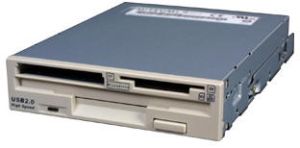 A rather strange combination of computer hardware has just become available. It mixes a 7-in-1 card reader with a floppy drive. This allows you to quickly (as quick as floppy drives work) transfer files from your old floppies over to memory card. The problem I have is that any floppy disks I have now do not work any more, and if they did, I still would not have a use for them as I haven’t tested them for maybe 8 years now.
 I can’t say I have ever in my life written about a prayer gadget before. However, this is now changing as I came across this prayer device which uses RFID technology. In some churches there is a tradition of lighting candles during a prayer. This device is named “for this we pray” and has RFID technology that lights up a wall mounted shrine which is modelled around a stained glass window effect. Several prayer cards can be chosen from and when you swipe one past the prayer gadget a light lights up. As more prayers are read out and swiped past, the more lights are then lit up.


