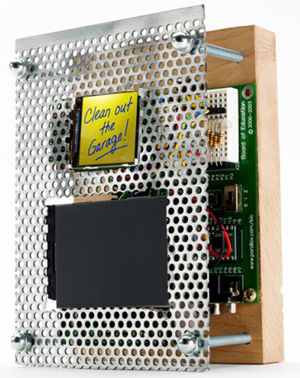
 The Post-It note was a great invention which many people still use today. Looking around the edges of my LCD I see several of them with tasks and information that I need to have at hand. They have served millions for years as self reminders. The problem with post-it notes is that they create a lot of clutter if not controlled. If I left my post it notes I could end up completely covering the edge of my screen with them. This is where the Electronic Post-It Note comes in to play. The home made device uses a computer track pad and a small LCD screen so you can electronically keep your post-it notes safe. When the task is complete you can then hit a button to erase the note clearing it for the next reminder you need to set. The device is powered by a rechargeable battery and requires some custom code to get it working. Luckily PopSci have done the hard work for you!
The project costs about $175 to build and is classed as a “hard” project to complete with it taking someone skilled about 7 hours.
Instructions Via: TechFresh
 Tengu is a white plastic brick which has LEDs that represent a face. A microphone inside the device picks up sounds and the mouth of Tengu attempts to lip sync with your music. The device is USB powered and either connects to a computer or USB outlet on the wall.
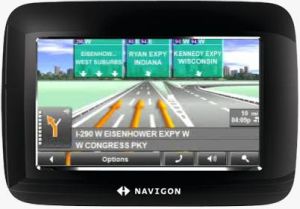 Navigon have launched a new range of Sat Nav units which have a number of new features. The first, pictured above, is called Reality View. What Reality View does is show a 3D image of complex road junctions. If you are a regular user of sat nav you will have arrived at a complex junction and not been able to tell which turning to take as it isn’t always clear on the sat nav screen. By using a 3D representation it makes it far easier to visualise which is the correct junction to turn off on to.
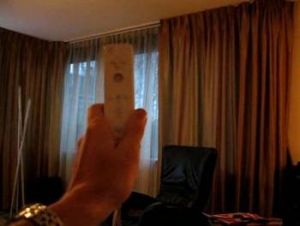 Not exactly the force as the post title may suggest. Rather, a Wii remote from the Nintendo Wii. I have seen a number of wii remote hacks over the last year or so, but this latest has to be the most handy of them all. The Wii remote has now been hacked and hooked up to some motorized curtains. If you want the curtains to shut, you rotate the controller left, and to close them, you rotate it right. It’s a very simple concept and truly made for the lazy in life.
 This little plane is remote controlled and built like a fighter plane out of Top Gun. Just seeing the name Top Gun is enough to bring back the cheesy lines from the movie. Anyway, this RC micro fighter can do loops and other aerobatics. It is powered by 2 engines (props) which provide it enough thrust to easily fly around. Landings and take off’s can be performed also. The remote control section is a dual channel allowing for up/down and left/right as well as a throttle control.
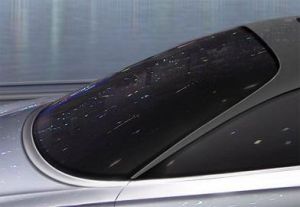 It car windscreen (or windshield if you are in the US) has been created on a car named the Hidra. Four layers of treatment are used to create the windscreen which keep it clean and eliminates the need for wipers to be used. The first layer of the system filters the sun out and repels water. Just under this layer is the second treated area which is built of nano-dust. This dust pushes the dirt to the sides of the windscreen keeping the main viewing area clear of dirt and debris. The third layer in the system senses the dirt on the first layer and activates the nano-dust as and when needed in the second layer. Finally a forth layer is needed to provide the electricity to power the whole thing.
 I can’t say I have ever in my life written about a prayer gadget before. However, this is now changing as I came across this prayer device which uses RFID technology. In some churches there is a tradition of lighting candles during a prayer. This device is named “for this we pray” and has RFID technology that lights up a wall mounted shrine which is modelled around a stained glass window effect. Several prayer cards can be chosen from and when you swipe one past the prayer gadget a light lights up. As more prayers are read out and swiped past, the more lights are then lit up.
 This lamp is one of the most unique ones I have ever seen. It is built in a retro style which reminds me of Sputnik although it has extra legs. The satellite is a chrome ball and has LED tipped spikes which emit red, green, blue or multi coloured lights. The base it stands on is 10″ Width x 18″ High.
 When taking your jumper off at night in the dark, it’s common to see sparks of static electricity that is generated. There is another way to generate small parts of electricity though by using a similar principle. Scientists at Georgia Institute of Technology have created microscopic wires that generate current when moving. The microscopic wires are bundled together and when movement occurs a tiny charge of electricity is created. A mixture of a lot of these can potentially create enough charge to power a device connected. The fibres are covered with zinc oxide nanowires which are extremely thin. Wires are split in to pairs where one of the wires is then plated in gold which then makes it act as the electrode. As movement occurs, energy is created.


